
DR. SIAVASH DEHGHANDr. Siavash Dehghan
A specialist digital presence for a neurosurgeon, focused on professional identity, a path to understanding symptoms, and measurable calls.
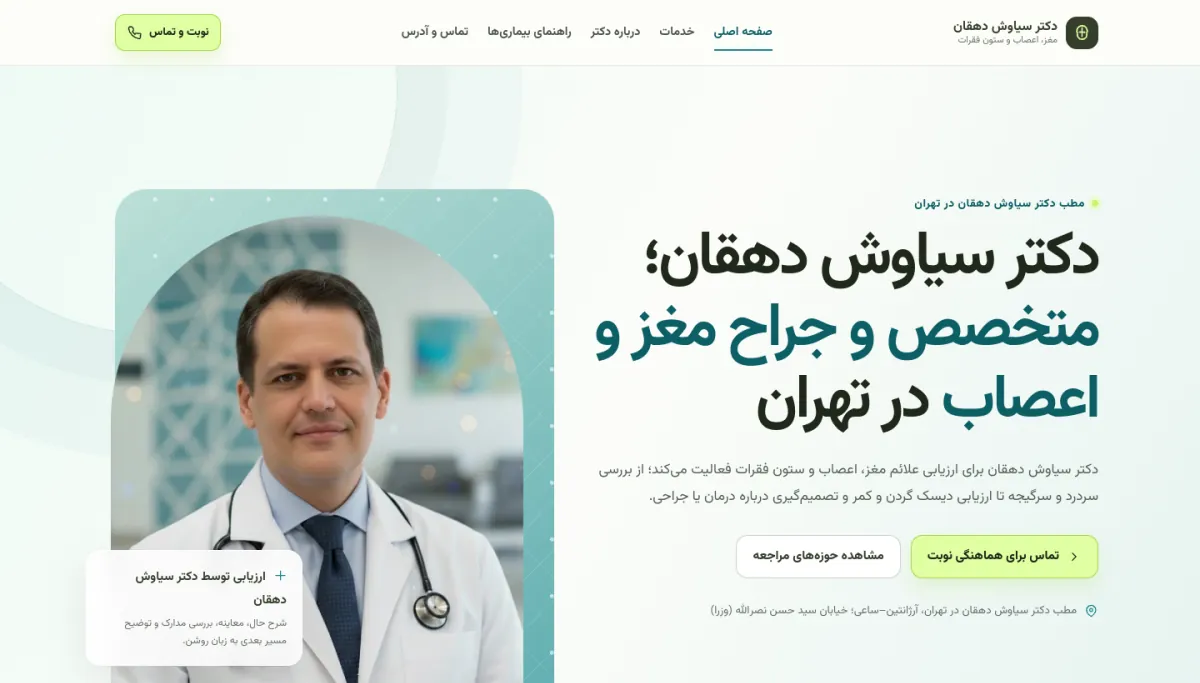
Image from the project’s public version, captured to document this case study.
How does the project work?
The four stages below show the product’s primary flow without exposing sensitive data or details.
- 01 / 04
Arriving with a concern
Users usually arrive with a symptom or a doctor’s name.
- 02 / 04
Initial understanding
Content clarifies the boundary between a sign, a service, and the need to seek care.
- 03 / 04
Preparing for a visit
The required documents and information are explained before coordination.
- 04 / 04
Traceable contact
The appointment path is direct, and calls are treated as a performance signal.
Medical users do not arrive with certainty
Many visitors do not arrive with the name of a specific condition; they have a worrying symptom, imaging result, or another physician’s recommendation. The page structure must acknowledge this uncertainty and clarify the next path without offering online diagnosis.
The physician’s professional brand should form in the same experience: precise, calm, understandable, and free of advertising claims.
From symptom to the right action, not self-diagnosis
Content connects the specialty introduction, common signs, treatment-decision process, and visit preparation. The goal is not to oversimplify a medical topic; it is to help users ask better questions and choose an appropriate action.
In the live version, the reading path begins with a symptom and reaches the necessary records and appointment coordination.
A personal identity without an advertising look
The physician image, specialty name, and quick information were placed at the start of the experience, but the page hierarchy does not let photography replace content. Calm colors and readable typography pursue trust through clarity and order.
In this project, the brand is not a logo or a single color; it is consistency of tone and the quality of responding to a user’s real concerns.
Brand SEO alongside real patient needs
The page must be authoritative for a search on the physician’s name and answer questions that form before a call. Rather than compete, these two paths sit beside each other in one content architecture.
Mass page production and guaranteed treatment claims were avoided; every page should have a clear role in understanding a service or preparing for a visit.
The real measure is the right user reaching the practice
On this kind of site, clicking a phone number is not merely an interface event. Call analytics helps clarify the quality of the entry path and the uncertainty users have before an appointment.
Call counts and details are not public, so this page explains only the measurement method and avoids unconfirmed figures.
A focused reference for name, specialty, and the visit path
The live site now presents professional identity, specialty area, preparation information, and the contact path in one coherent experience.
The next case-study stage can use confirmed call data and frequently asked practice questions to record content’s effect on input quality more precisely.
What was built within the project scope.
This list is based on project outputs that can be stated publicly—not speculative features or unverified technology.
- 01Physician digital identity
- 02Content and service architecture
- 03Symptom and guide pages
- 04Appointment and contact path
- 05Brand SEO
- 06Call analytics
- PERSONAL BRAND
- MEDICAL CONTENT
- WEB DESIGN
- BRAND SEO
- CALL ANALYTICS
Do you have a similar challenge?
If your project sits between web, operations, content, and automation, we can first clarify the problem and the shortest path to build it.
Start a conversation on Telegram